INSIGHTS
Bringing emotion to social good branding

Branding pioneer Walter Landor famously noted, “Products are made in the factory, but brands are created in the mind.” Decades later, it’s still one of the best descriptions of the role of branding. But there’s another layer to this idea that I find even more relevant to the modern world of branding for social impact: brand affinity starts in the heart.
Humans act on emotions. The most enduring consumer brands — think Apple, Nike, Coca-Cola — have understood this for decades, with pitches focused on the delight you will experience using a magical gadget, the confidence that you will bring to the court, or the happiness you will feel when you share an ice-cold beverage with your closest friends in the golden light of a late August afternoon. Landor himself would often say one of the primary goals of a brand is to create enjoyment for consumers.

In the social good sector, brands have long been skilled at crafting visionary mission statements of lofty ambition, and those working in the sector put a lot of emotion in their work — the deep passion for what they do and the difference it makes in real people’s lives. But that passion does not always translate when it comes to organizational communications. Messaging often reverts to educational descriptions of the challenge, complex theories of change, and infographics full of dry statistics. Emotions are hard to quantify, and even harder to ignite.
When building a brand in the social good sector, crafting communications to elicit specific emotions in your audiences can be a powerful way to guide your audience’s decisionmaking. Every communication has a both a functional and an emotional job to do. Take a non-profit fundraising email as an example. Sure, the functional goal is to raise money, but what are the emotional barriers to contributing to your organization that need to be addressed? Does it need to build more trust for your organization? Then optimize the words and visuals to evoke confidence and respect, maybe supported by testimonials from respected authorities. Does it need to inspire about the potential for a better future? Design for awe and joy. We rarely recommend evoking fear and anger, as positive messages are much more powerful, but if needed for specific topics, always follow it with a clear path for improvement to shift from the negative to empowerment.
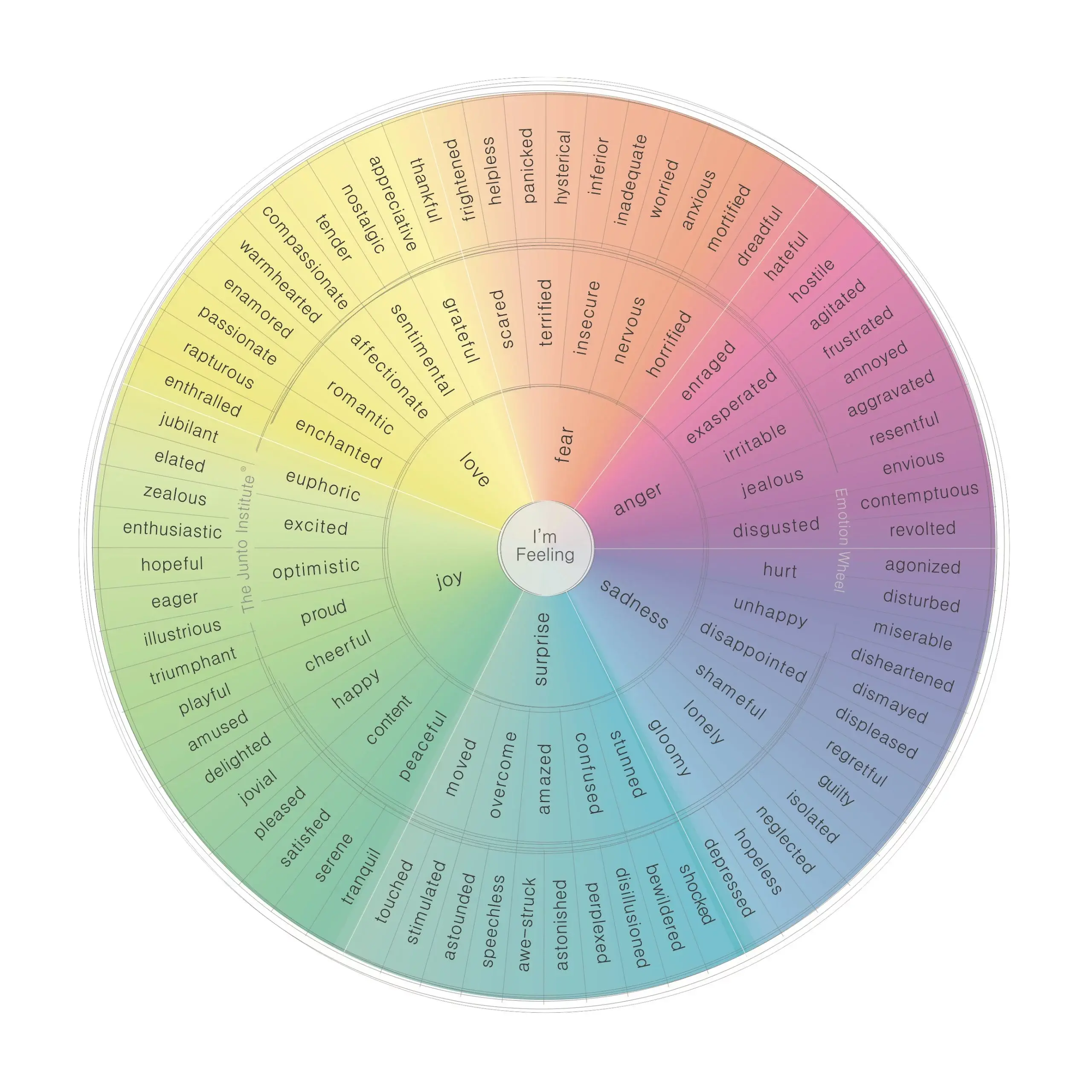
Taking these lessons to the brand level, designing for emotional response can be a powerful frame to guide the brand development process. Having a set of key emotions that you hope to elicit in your audiences provides a flexible framework for creating brand communications that truly resonate on a human level.
• • •
Here are a few tactics to incorporate into your brand development process to help you harness the intangible qualities that can ensure your brand inspires real emotion in your audiences.
Use interactive brand visioning workshops to get stakeholders thinking creatively.
When conducting an organization-wide rebrand, it’s not enough to conduct a few 30-minute interviews with stakeholders as information-gathering. Yes, a range of interviews is important to get a variety of perspectives, but these tend to remain surface-level, covering the same rote descriptions of mission, strengths, and weaknesses. It’s important to augment these with interactive workshops, focused on exercises specifically designed to get beyond the literal, to uncover the intangible qualities, emotions, and roles of your brand.
At Ultravirgo, one common exercise in our brand visioning workshops is based on psychology — using Jungian archetypes to define what role the brand should play to its audiences (as well as comparing to the brand archetype of each of its competitors). A “caregiver” brand will communicate very differently than an “outlaw,” and a “hero” will not use the same words as a “sage.” Using these archetypes as a lens to envision the new brand starts to point to the types of emotions that you want your audiences to feel when they think about your organization and cause.
When planning these workshops, involve a wide range of perspectives. The now-common acceptance of conducting these over videoconference rather than requiring in-person interactions means you can involve an even wider geographic and ethnographic distribution of participants. Typically we like to run these with eight to 12 participants, with one to two representatives from each of: the communications team, C-level/board executives, field staff, external partners, and end beneficiaries of the organization’s work.
Ensure that all brand team members experience the brand in the same way that your audiences do.
Whether you are developing your brand with an in-house team, or with the support of an external partner, it’s crucial that all team members understand the real-life context in which your brand is experienced by your audiences. Desk research of reviewing the official outputs of the communications team are not enough — brand touchpoints go far beyond the website and marketing materials.
Send your brand team out on field trips to experience each of your key activities and at least two representative locations of your work. In the social good sector, there typically aren’t factories to tour or products to test. But “ride-alongs” to meetings with partners, visits to field offices, and conversations in communities among those who benefit from your work can help the team understand the mindset and behaviors of your audiences to ensure that your brand communications are context-sensitive and inspire the right emotions for each situation.
Create a framework for brand decision-making.
Gone are the days of telephone-book-sized brand manuals that define how to create every possible communication in minute detail. Sure, you need easy reference for color values, logo placement, sub-branding, etc. But in order to adapt to a range of audiences, across many media, over a long period of time, it is crucial to define the intangible qualities of a brand that can guide brand decision-making on an ongoing basis. By developing a framework of qualities like behavior, voice, and personality — documented in the brand manual — you empower staff to think of the brand more like a living entity with purpose, rather than as a static set of rules that they are forced to follow.
Start with a set of brand “voice” or personality words, as well as brand principles that can guide all communications. While these are often a bit ambiguous, they can help communications staff and vendors understand the intent behind the system. Additional tactics, behaviors and brand “moves” can inspire new ideas, while providing a guided framework for decision-making for what is on-brand (with tangible examples). This helps ensure that communications evolve and grow in ambition — building up, rather than eroding, the brand over time.
– – –
Cover image: Adapted from Sixteen faces expressing the human passions. Coloured engraving by J. Pass, 1821, after C. Le Brun. Wikimedia CommonsSource: the Wellcome Collection. Adapted under Creative Commons license.