INSIGHTS
Creating brands with intent
Brand strategy is one of the most misunderstood aspects of the brand development process. Honestly, I think the branding industry itself is to blame. The term “brand strategy” gets used as an umbrella for a wide range of services, with explanations obscured behind buzzword-heavy business jargon and descriptions of some mystic Proprietary Process. The fact that “branding” as a profession grew out of graphic design points to why strategy often gets overlooked, playing second fiddle to flashy design systems and clever logos. So, when budgets and timelines get tight (when aren’t they?), strategy often seems to be the phase that organizations try to condense.
But when problems arise during or after a brand launch, they can usually be directly attributed to having cut corners in the early development stages. We have heard many reasons for trying to skip brand strategy, from “we already have a good idea of who we are”, to “management doesn’t have the appetite for a big change”, or “we just need a visual refresh for something new”. Often, this is meant to justify condensing the strategy phase to quickly get to design and deliverables. Frankly, for many people, the visuals are the most fun (and most apparent) part of a brand, so I understand the desire to jump ahead. But if brand strategy is ignored, all too often the output is designs and messages that are based on false assumptions and half-baked hunches, creating internal division and external confusion, and ultimately resulting in the need to start over yet again in a year or two. Trust me, I’ve seen it.
For organizations with existing brands, there is also the fact that communications never stop. One of the business metaphors that I hear most frequently is the old, “We’re going to need to build the plane while we fly.” (Truth be told, it’s one of my favorites. The mental image of a pilot trying to steer a plane with one hand while bolting a landing gear on with the other cracks me up every time.) In our world of branding, it typically means getting a new brand framework in place alongside existing initiatives, then rolling out new assets and media over time. This approach can work, but only when it doesn’t disrupt the order of the process. To further the metaphor, it’s not that the strategy is the plane’s structure, but that it’s the blueprint. You can’t build a plane if you don’t know what kind of plane you are building, or even whether you’re building a plane, or a car, or a house. If the entire plane is your brand, your strategy is its initial blueprint.
So, let’s dive into what a brand strategy is, what purpose it serves, and a few tips for leveraging it to expand the impact of your brand.
At its core, creating a brand strategy is about defining your intent.
• • •
What it does. While most organizations have the usual elements that express a brand — logo, messages, a color palette — what many are missing is a clear intent that sits at the center of it all, orchestrating those elements. Brand strategies clearly define both the why and what of the brand — combining a compelling vision with the tools and framework required to support ongoing decision-making that brings that vision to life in a way that is relevant to key audiences. Both the verbal and visual brand elements are direct expressions of the brand strategy. The how and when of brand communications typically come later, building on the foundation of the brand strategy to develop communications plans, and marketing or fundraising strategies that are tailored to the moment.
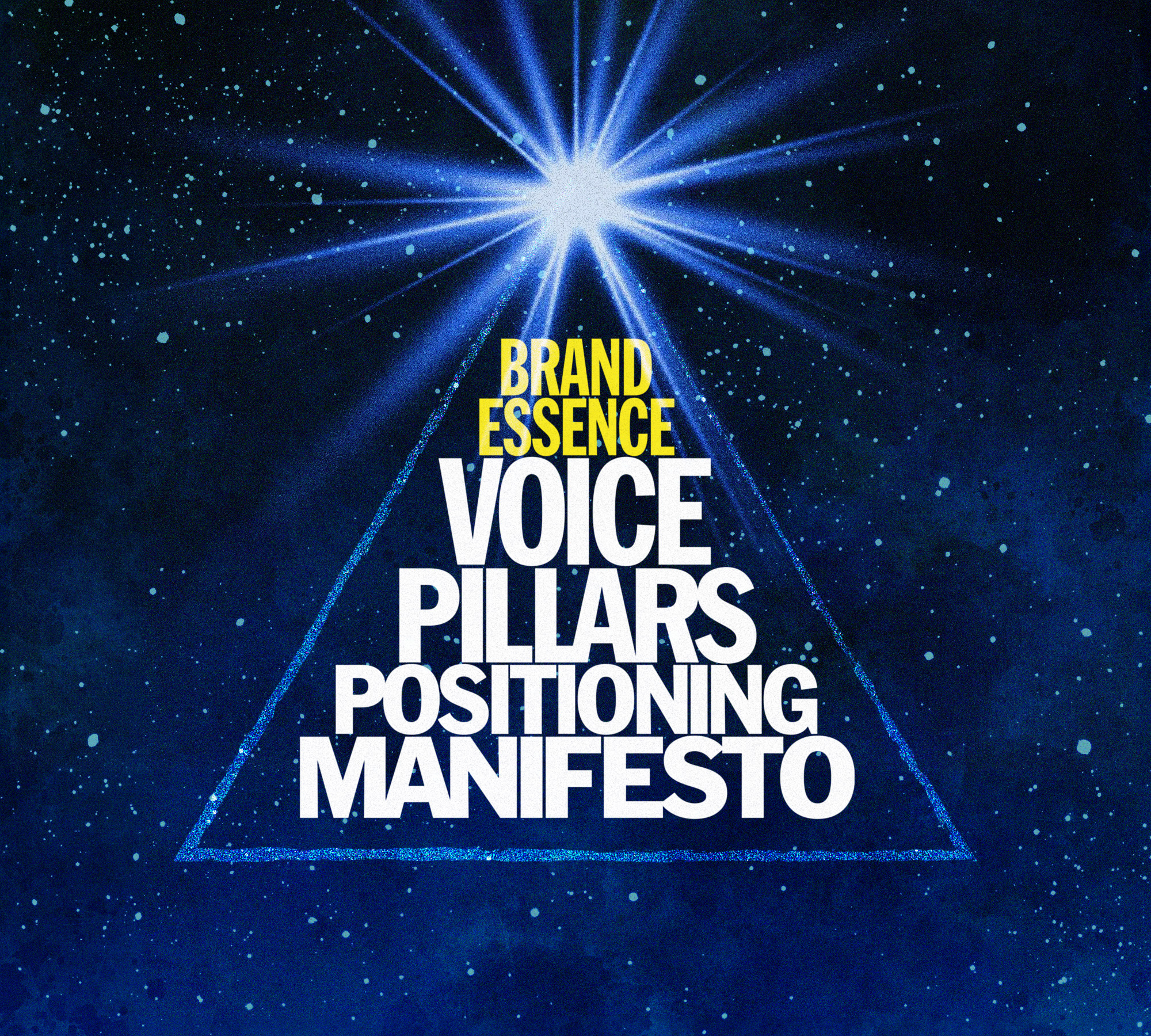
What it is. A brand strategy will include a number of components, which will vary from organization to organization. Some common elements include a mission statement to present a vision, a positioning statement to define what is unique about the brand within their sector, a set of brand values to guide decision making, a brand voice to imbue some personality, and a manifesto to inspire. At the center of it all is a brand concept, or brand essence, that distills the single most important idea that you want people to associate with your brand. As Jeff Bezos famously said, “Your brand is what other people say about you when you’re not in the room.” The function of branding is not a deliverable, nor a one-way description of who you are. Branding is a process — one of defining what your organization represents and being intentional about how you interact with your audiences in a way that is relevant to them. It’s how you can help to influence what people say about you when you’re not in the room.
Creativity built on insight. Love or hate Bezos and the empire that he built, what I think he gets right in the quote above is the framing of a brand from the outside in. Where many brands fall flat is the desire to just describe what they do, looking for words and pictures to communicate what they want people to hear. This is where the investment in brand strategy can be the most effective, getting into the intangible attributes and qualities to smartly address the motivations of the key audiences. Which is why the process of creating an effective brand strategy requires a lot of research in order to be able to make informed decisions. At Ultravirgo, we mix desk research, competitive analysis, qualitative interviews, quantitative surveys, interactive workshops, and experiential research to understand both the organization and its audiences. But don’t confuse a need for heavy research for a lack of creativity — it is only by using that information to uncover unexpected insights and fuel creativity that you can build a strategy that is both unique and relevant.
Brand strategy expands impact. Not long ago, an international NGO came to us asking for a new visual identity. The organization felt they looked dated, and that this was negatively affecting their ability to forge partnerships with the private-sector companies that were required for their model to work. After reviewing their materials and speaking to their audiences, we confronted them with a deeper challenge: yes, their design could use updating; but more problematic was a lack of clarity in describing what they do, resulting in fundamental misunderstandings of their value proposition that led potential partners to feel like adversaries. In short, it was brand strategy, not brand design, that was holding them back. A brand strategy initiative articulated a higher purpose that was aligned with their marketplace, supported by descriptions of how they achieve impact for partners and an overhaul of their visual system, which opened the door to new partnerships with global consumer brands that fueled an expansion into new countries.
Setting up for success. The fact is, brands are inherently built over time, and smart brands are constantly evolving and reacting — to audience expectations, new media channels, learnings from their own operations, societal shifts, and more. That said, effective brands are also unwavering in their core values and mission. Knowing the difference between the aspects of your brand that are timeless and the elements that are reactive to your audiences, is central to an effective strategy. The difference between an impactful brand and a haphazard system is having a clear blueprint.
• • •
If you’re looking to build a brand, whether creating from scratch or embarking on a rebrand, here are a few process tips to ensure that you can develop an effective strategy:
Don’t let short-term schedule pressures drive long-term strategy.
Yes, there are always deadlines and specific materials that need to be created for specific dates. Brand communications never stop. And it takes a fair amount of time to do the research and develop a brand strategy — at least three months, but it can be up to 12 months for complex organizations — even before any potential messaging and visual design. The answer in almost all cases is to put the brand development on a separate track outside your existing cycles — just plan to keep producing the necessary materials based on your current brand system for the next six to nine months while you work on a deeper analysis. For new brands, the process is usually quicker, but you may still need some interim materials; keep them simple and adapt later. And don’t worry about any deliverables in the new brand until you have a clear picture for what it will be. A solid brand strategy should last five to ten years before needing a rethink, so don’t rush it.
Ensure diverse stakeholder voices are represented in research.
Use quantitative and qualitative research to find out both how your own team views the brand and what your most important audiences think about you — their expectations for what you offer, and how this might differ from your own perceptions. But when doing so, be intentional about what audiences and types of people you are consulting, and how you reach them. For example, it’s important to get beyond just talking to your five favorite clients and partners, who will present a skewed view. Often the most enlightening insights come from those who have left or chosen not to work with your organization. It can be helpful to bring representatives from each of your key stakeholders into the same room for a brand workshop and really dig into their viewpoints.
Bring leadership along in the process, but don’t look to them for solutions.
When it comes to rollout, you want your biggest voices to be your biggest champions, and for that they need to believe in the new vision. It’s crucial to involve all key leadership early, to ensure that their input and guidance can be heard, as well as at key review points to ensure they are in alignment and understand the new recommendations. But creating something new often involves challenging the status quo, requiring stepping outside the current modes of thinking to find new opportunities. Leveraging outside experts can help ensure the bigger picture is in view and a broader perspective can be taken. Then, once a recommended strategy is identified, leadership should become the biggest brand ambassadors and remove any internal barriers to adoption before rollout.
Get alignment on frameworks, not guidelines.
Gone are the days when corporate identity manuals spelled out every possible scenario in excruciating, inflexible detail. Modern organizations are decentralized, especially so lately, and modern brands need to adapt and empower a broad range of staff to make brand decisions in the face of new challenges on a daily basis. Your strategy should clearly state the values and define the frameworks that guide these decisions to build your brand over time. Beyond specific words and guidelines, it’s the intangible qualities — values, tone of voice, etc. — that can be the most valuable, as they are what will guide your brand through new media and changing markets. Get organizational alignment on these values early, then use them as the inspiration for all future stages and the litmus test for subsequent decisions. The strategy becomes the “constitution” of the brand, giving you something to always refer back to should disagreements arise, ensuring decisions are made with a higher purpose in mind, outside of individual agendas.
• • •
Just like the miracle of flight, a proper brand strategy is both inspiring and practical. Once you have a clear blueprint for your brand that the team believes in, you may be surprised how easy it becomes to bring it to life through design and messaging. The trick is to lay the groundwork early, by making the tough decisions in the strategy phase, so the rest of the process is efficient and effective. Have a great flight!