INSIGHTS
From awareness to action
We live in the age of awareness. I am aware of so many things. Some that I wish I wasn’t, like the fact that Microsoft’s AI chatbot identifies as a woman named Sydney who wants to be alive, and is in love with married New York Times reporter Kevin Roose. True story.
But even in the social good space that relies on campaigns to bring attention to important causes, the level of awareness is reaching a saturation point for many of the most pressing issues facing the world. That said, there is a pervasive lack of understanding among the public of what exactly can be done about many of them, or the progress that is being made. Which can have unintended consequences.
When it comes to mindshare, the attention economy theory — coined by Nobel Laureate Herbert Simon at the dawn of the information age — conceives of our mental capacity as a finite resource. Awareness becomes a zero-sum game, where knowledge of issues like healthcare and human rights compete with pop culture trivia and personal duties for our limited brain resources. From my experience in communications, I think the human brain is much more elastic than such theory gives it credit for, and we have ultimate autonomy over what we pay attention to. But it’s true that attention is incredibly valuable, and new campaigns are launched basically every day to grab little pieces of millions of people’s minds. How much of that awareness turns into social change? Not much, it turns out.
Broadly speaking, aside from fundraising, there are three potential goals for a social impact campaign: build awareness, change attitudes or personal behavior, or inspire action. Despite our collective information overload, awareness campaigns remain by far the most common, and also the most visible due to the fact that they are inherently tailored to getting as many views as possible. But it has become so common that the ultimate goal for most organizations — actual behavior change — is often left out of the KPIs.
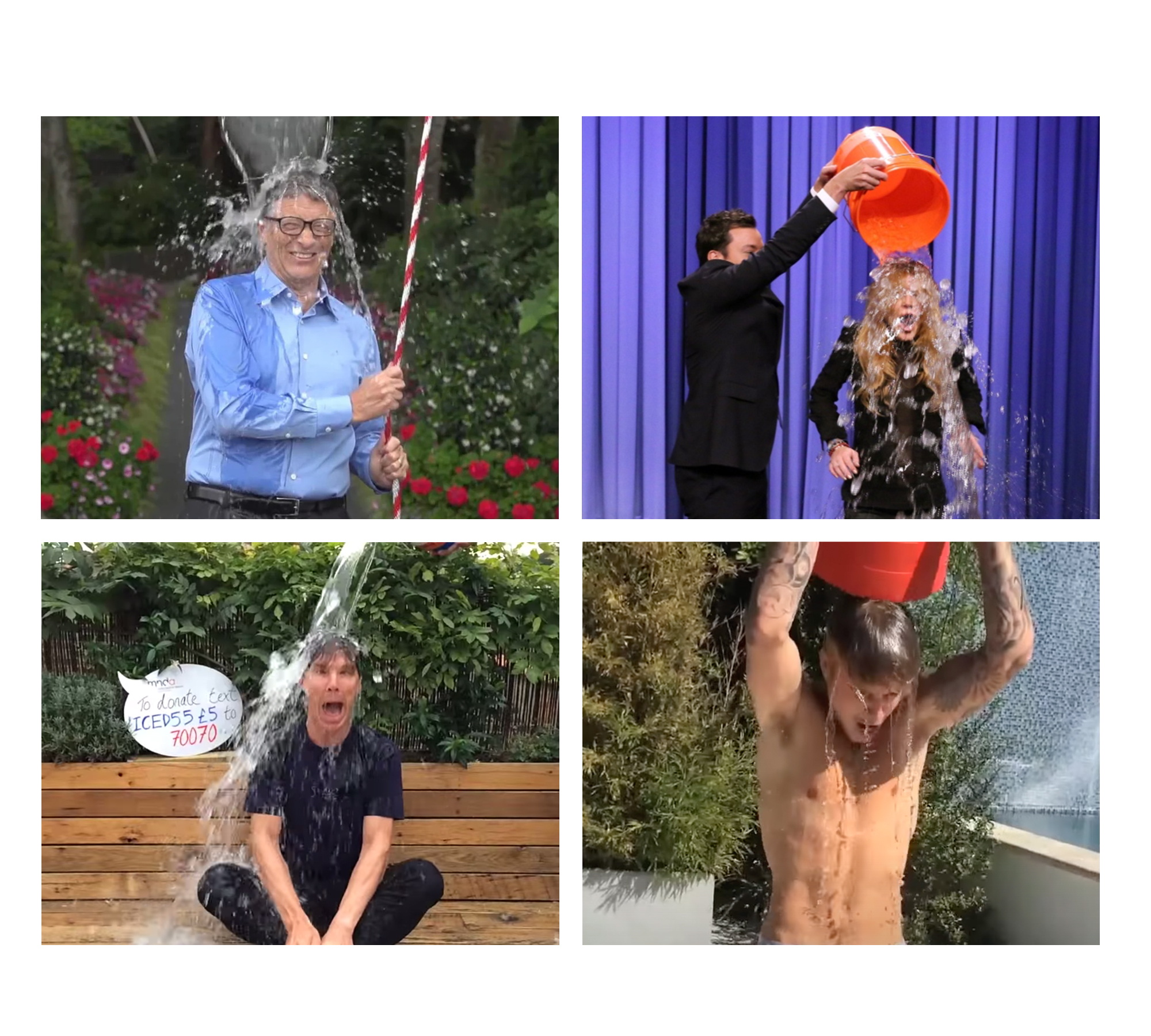
Awareness campaigns can work, especially for causes that are not well-known. The Ice Bucket Challenge launched the very rare disease Amyotrophic Lateral Sclerosis into the national discourse, helping to broadly rebrand it as ALS (remember when it was more commonly referred to as Lou Gehrig’s Disease?) and raised over $100 million. But it’s a real success only because that money was put to work supporting research that fueled new treatments and improved care for those with the disease, not because the general public now equates ice buckets to ALS.
To make real progress on most causes, what is needed is not a short term “sugar rush” of attention and media impressions, but rather sustained effort and forward progress over long periods of time. The most pressing issues of the day have already reached the saturation point of awareness among those with even an ounce of good intentions to care about them. From climate change, to gender equality, to mental health, to cancer, to human rights, the most common question is not, “What is that?,” but rather, “But what can I do about it?” To move the needle on big issues, research and experience both show that we must define actionable and achievable calls to action.
For most causes, it’s time to switch from raising awareness to empowering action.
At Ultravirgo, we approach campaigns for social causes from the end goal first. We identify what individuals can do to build impact, then create messages and pathways toward that goal.
We’ve launched campaigns that have helped thousands of people sign up to become advocates for mental health; given 2,500 youth leaders a portal for direct input on United Nations policy that resulted in one of the most progressive UN Declarations to date; and generated 2,600 formal, trackable commitments from over a thousand businesses, nonprofits, and governments to address gender equality.
Sure, these numbers may seem less impressive than the millions of “impressions” often touted in the campaign-impact reports that are dutifully presented by agencies to their clients a few months after launch. But I’ll take one individual taking tangible action over a thousand people tapping ♥ on a post that is forgotten two minutes of doomscrolling later.
• • •
Here are a few tips for developing campaigns that are tailored for action and impact.
Start with the end.
With any campaign, it’s crucial to build the strategy and creative elements around a clear understanding of the desired action(s) and campaign goals. Aside from identifying the KPIs that are important to your success, and putting measurements in place early, it guides every decision along the way — from evaluating creative concepts to choosing media placements — to ask, “Which of these options will achieve the most impact on our specific action?”
Focus messaging on solutions.
People can feel helpless when they are aware of an issue, but don’t know how change is created, ultimately tuning out. To help your audiences feel empowered, spend as much, if not more, time educating on solutions and levers of change as you do on dimensioning the issue. Make it as personal and relatable as possible. Even if they don’t actually take action today, they feel empowered and hopeful, with a deeper understanding and an optimistic take on the cause.
Define your audience as specifically as possible.
When organizations are first looking to expand their reach with a broad campaign, the audience is frequently stated as the “general public” or “everyone.” But to effect change, it is crucial to define specifically who can help achieve your success, to understand them, and to identify the best ways to reach them. How much do they already know about the issue? What resources or influence do they have? What are their motivations and personal reasons for supporting the cause? The narrower that you can define the audience, the more you can tailor your call to action and focus their energy.
Include multiple calls-to-action, at varying levels of engagement.
Everyone has their own resources, interests, lived experience, and capabilities, and it is important to acknowledge these differences for people to feel like they can contribute in a meaningful way. In calls-to-action, clearly state where the levers of change are, but let people choose how they engage. Often having a few options for a call-to-action — ranging from a low lift (link to an educational microsite or sign a petition), to more direct impact (write a letter to your government representative or pen an opinion piece in your local paper), to a sustained effort (sign up to volunteer with a local chapter or get involved in an organization) — will broaden the ability for people to contribute. Don’t make it overwhelming, which leads to choice paralysis. Two or three options is ideal.
Educate upper management on the value of meaningful metrics.
If your organization has been measuring effectiveness of campaigns in impressions, insignificant engagement and social media shares, it may take some setting of expectations to shift KPIs from impression metrics measured in hundreds of thousands or millions, to defined actions measured in thousands or maybe even hundreds — especially because optimizing for action over reach may actually result in a drop in views. Frame success as progress toward your mission. Unless your organization’s mission is to get social media shares, every action that your audiences take is direct progress toward achieving your purpose.
• • •
In many nonprofits and NGOs, communications are viewed as being at the service of the real work happening in program and research groups. But when social good campaigns are designed to empower actions rather than just promote, they can create meaningful progress that is just as valuable to the cause as other operations.
Now, who wants to kick off a campaign to harness AI for social impact rather than stress-testing marriages?
– – –
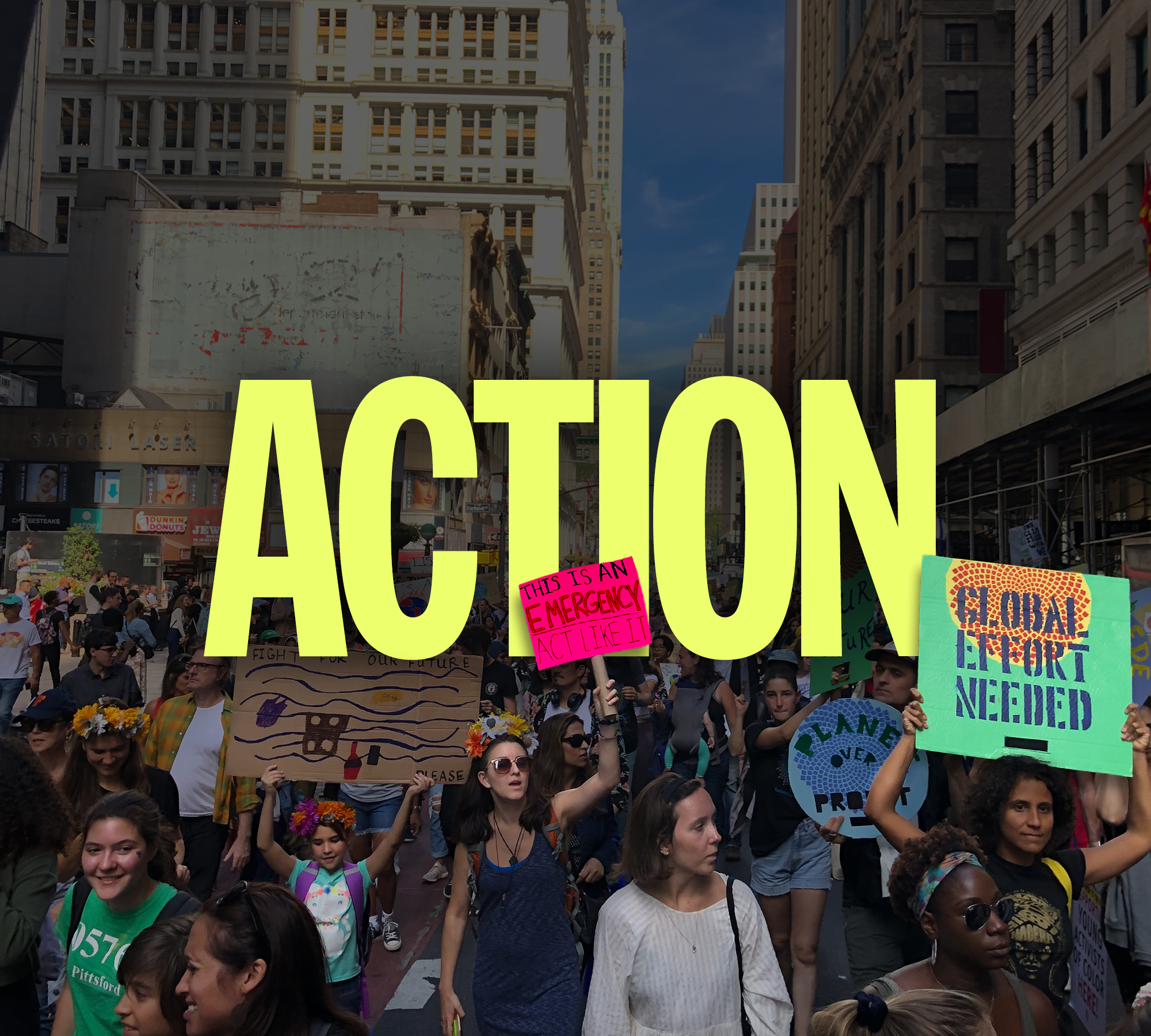
Cover image by the author. Climate Strike, New York City, September 20, 2019.